
Greater Edmonton Area (GEA) | Data: REALTORS® Association of Edmonton
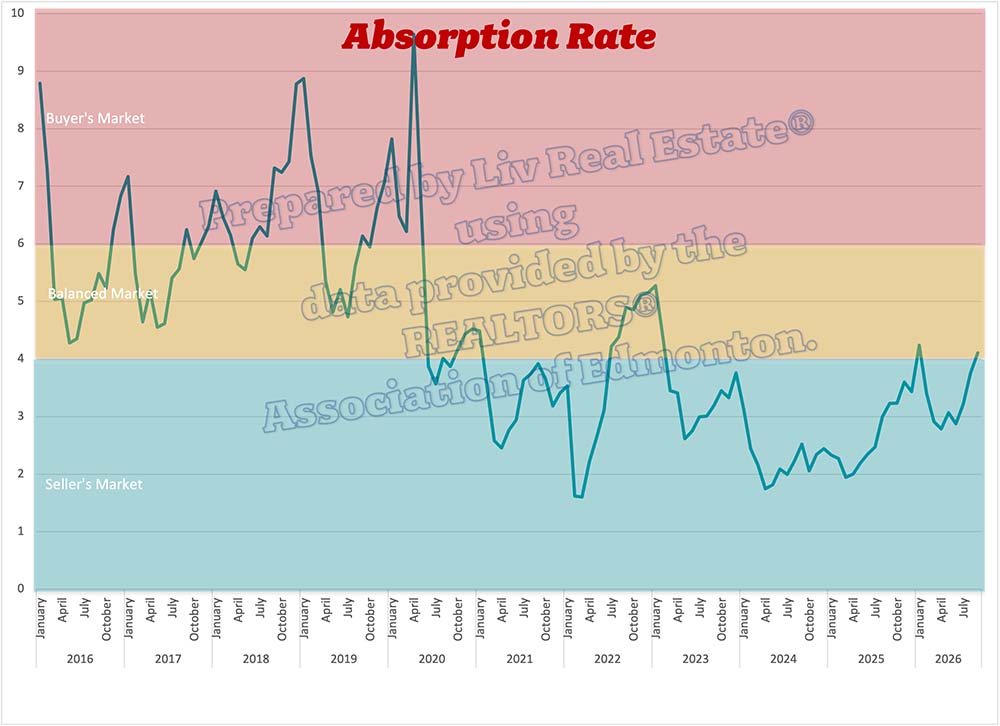
TL;DR: Edmonton’s market crossed into balanced territory in September 2026 for the first time this year, with absorption reaching 4.11 months. Sales fell 10.6% year-over-year while new listings rose 6.0%. The single-family benchmark held flat at $518,900 (0.0% YoY). National headwinds, including the trade war escalation and rising long-term interest rates, are weighing on buyer confidence, and the October 19 separation referendum is adding a local layer of hesitation. Sellers need to consider current market conditions when pricing; those anchored to last year’s comps face an increasingly patient buyer pool.
Edmonton Housing Market, September 2026: Balanced Territory, Cautious Buyers
September 2026 marks a meaningful shift for the Greater Edmonton Area: for the first time this year, the market has crossed into balanced territory.
Overall Market
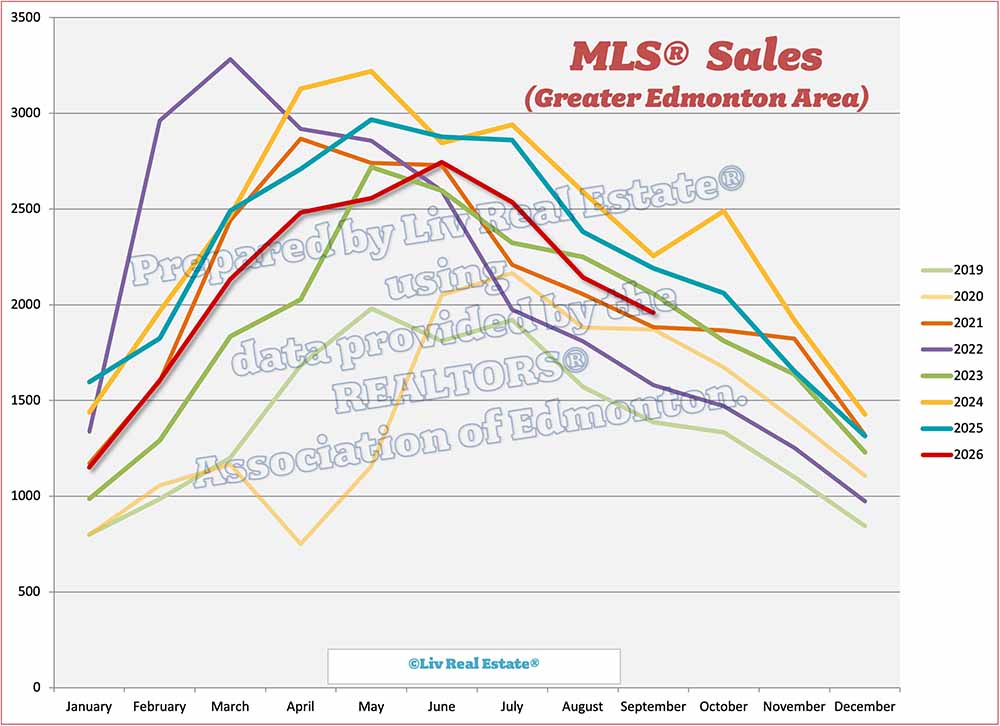
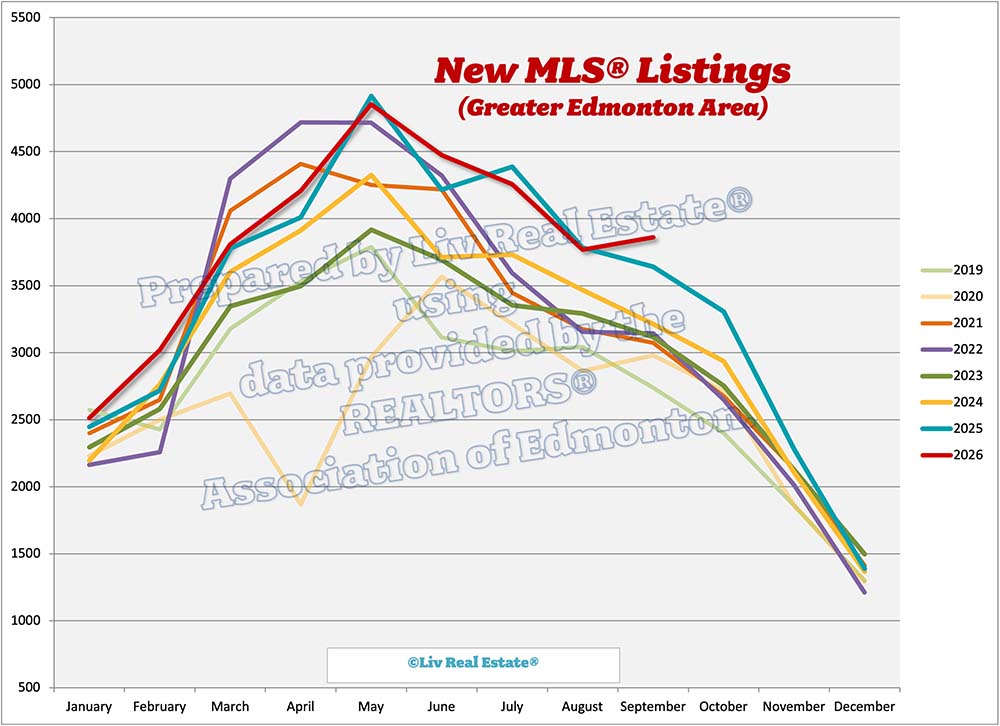
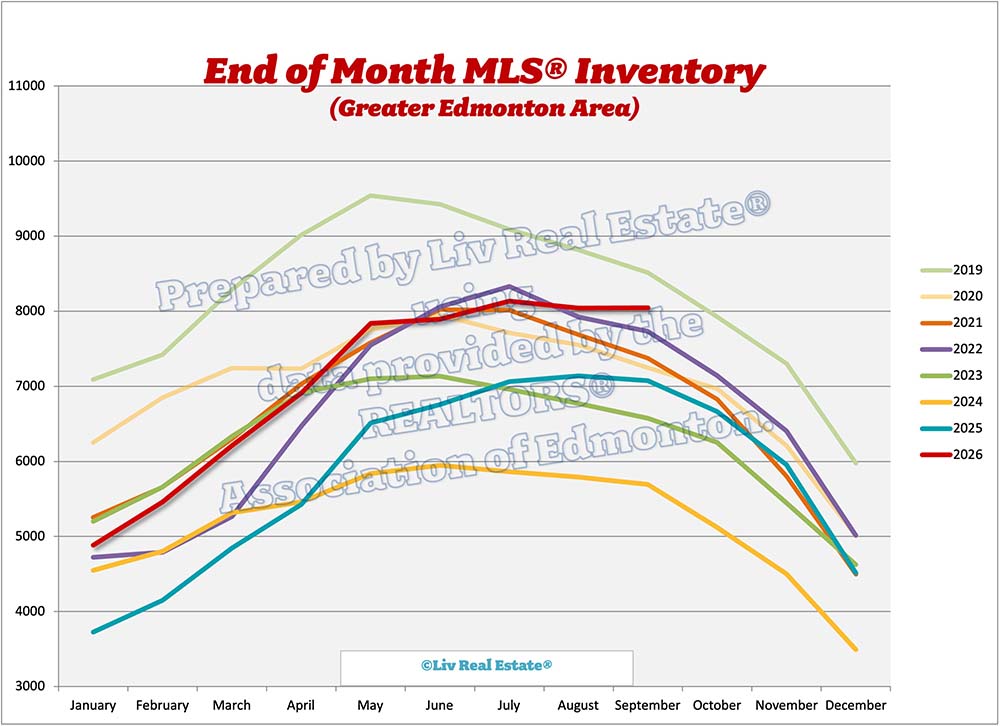
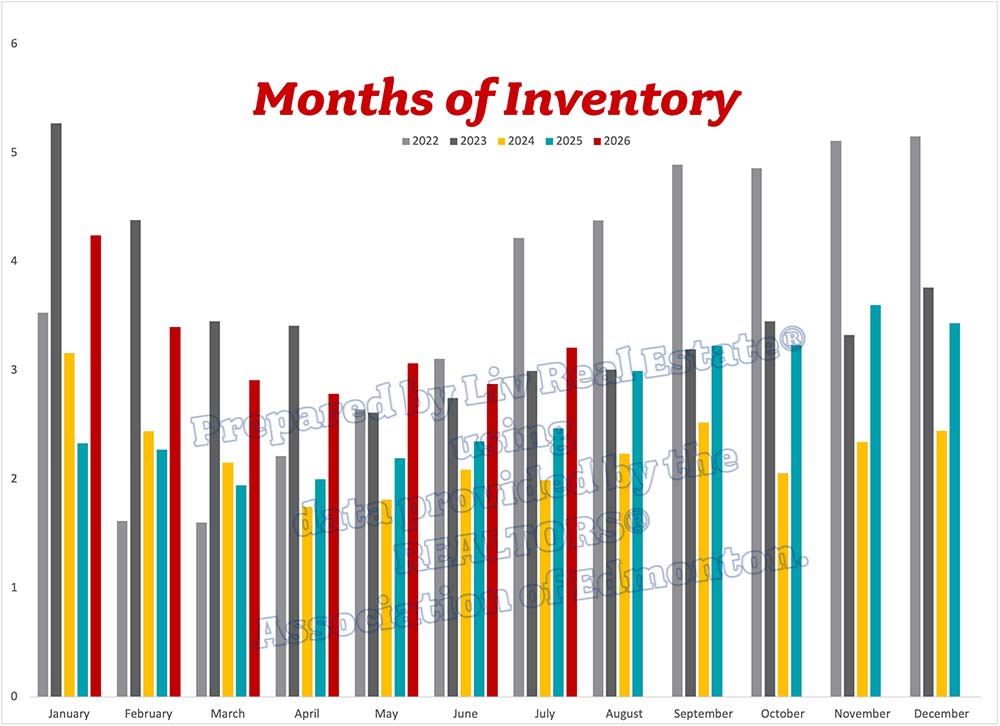
Residential sales totalled 1,959 — down 10.6% from 2,191 in September 2025. New listings rose 6.0% year-over-year to 3,860, pushing inventory to 8,047 units (+13.8% YoY). Absorption reached 4.11 months and days on market stretched to 67, up from 53 a year ago. The sales-to-listings ratio fell to 50.75%. These are the clearest signals yet that the advantage has shifted away from sellers.
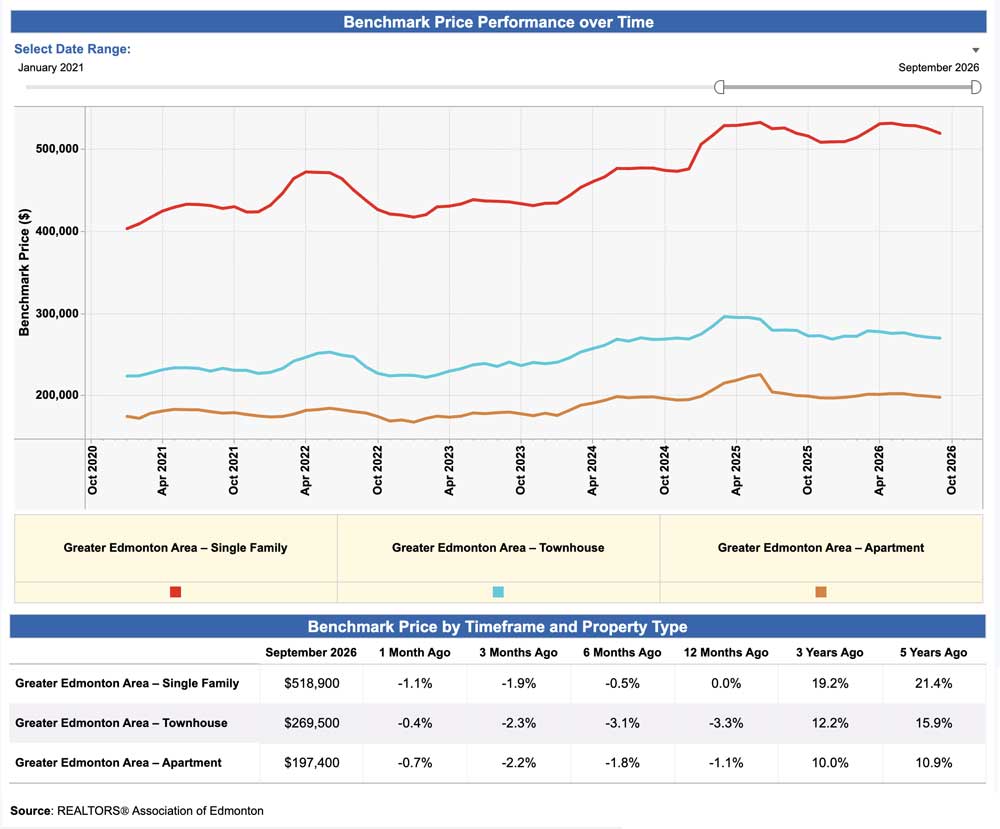
RBC Economics noted that Edmonton prices stabilized in September after faster depreciation earlier in the year (the single-family benchmark is sitting exactly flat year-over-year at $518,900). Townhouse and apartment benchmarks, however, are down 3.3% and 1.1% year-over-year, respectively.
The Macro Picture
Nationally, confidence came under renewed pressure in September as trade war escalation and rising long-term interest rates put buyers on the defensive. Edmonton isn’t immune. That said, ATB Financial projects Alberta’s real GDP will grow 2.6% in 2026, well above the 0.9% projected nationally, with growth anchored by a resilient energy sector that provides meaningful insulation from the national drag. Edmonton still has an affordability advantage compared to Vancouver and Toronto, where single-family benchmark prices are roughly $1.8 million and $1.1 million, respectively, compared to approximately $518,900 here.
The Referendum Factor
Closer to home, the October 19 separation referendum is adding a distinct layer of hesitation. Many clients have told our agents they are waiting to see the vote's outcome before moving forward with a purchase. A no vote, combined with potential approval of a new West Coast pipeline, could trigger a meaningful wave of demand later this fall.
Bottom Line for Sellers
With absorption at 4.11 months, days on market at 67, and both macro and local political uncertainty in play, Edmonton is in a genuine holding pattern. The referendum is the biggest near-term catalyst, in either direction. Keep in mind, the seasonal window for selling is narrowing fast. Sharp pricing from day one is not just good advice in the current market; it’s the only reliable path to a sale.
Key Stats at a Glance
- September 2026 Residential sales: 1,959 (−10.6% YoY)
- New listings: 3,860 (+6.0% YoY)
- Active inventory: 8,047 (+13.8% YoY)
- Days on market: 67 (+14 days YoY)
- Absorption rate: 4.11 months (balanced market threshold)
- Average sale price: $466,080 (+2.9% YoY)
- Median sale price: $435,000 (0.0% YoY)
- Single-family benchmark: $518,900 (0.0% YoY)
- Townhouse benchmark: $269,500 (−3.3% YoY)
- Apartment benchmark: $197,400 (−1.1% YoY)
- Alberta GDP growth forecast: 2.6% in 2026 (ATB Financial)
- Alberta separation referendum: October 19, 2026
Enjoy this blog post? Click here to subscribe for updates
Leave A Comment